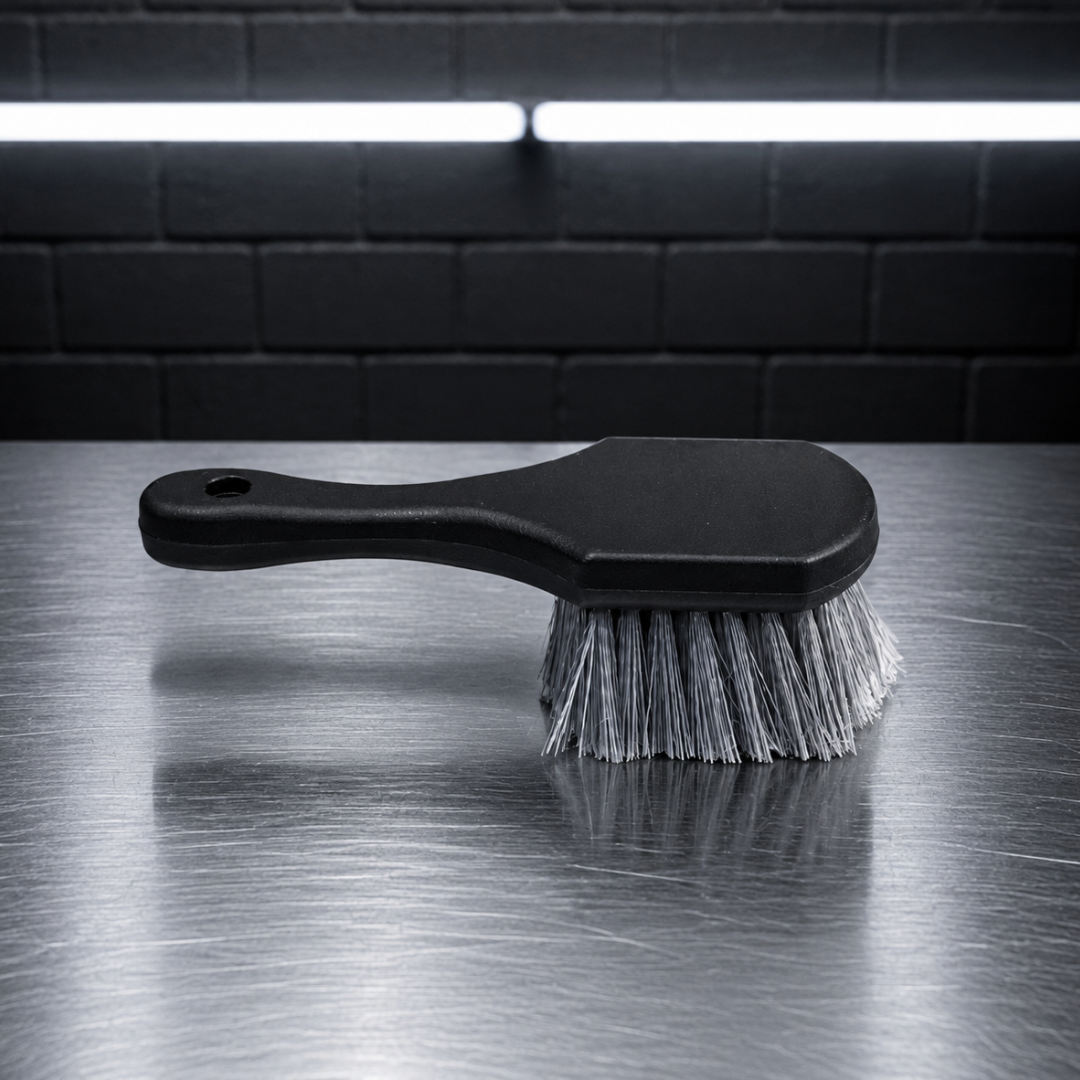
What does the UNLOCKD Heavy Duty Carpet & Interior Brush do?
The UNLOCKD Heavy Duty Carpet & Interior Brush helps loosen embedded dirt from durable vehicle carpets and floor mats through manual scrubbing. Its densely packed bristles work a suitable cleaner into soiled areas, while the ergonomic handle gives you control over pressure and movement. It is useful when vacuuming removes loose debris but leaves ground-in grime behind. The brush handles the agitation step; loosened dirt and cleaner residue still need to be removed with towels or suitable extraction equipment. It suits both at-home interior cleaning and professional detailing.
How do I clean car carpets with this brush without damaging the fibres?
Vacuum first, test a hidden area and use light pressure with short, controlled strokes. Apply a cleaner approved for your carpet, follow its recommended dwell time and gently agitate a small section before removing the loosened soil. Avoid repeatedly scrubbing one spot or pressing hard enough to flatten the bristles. If fibres begin to fuzz, pull or change texture, stop and switch to a gentler tool. Do not soak the carpet backing. Allow the area to dry thoroughly before replacing floor mats, and reserve heavy-duty brushing for dirt that regular vacuuming cannot remove.
Can I use the Heavy Duty Carpet & Interior Brush on cloth seats, leather or interior trim?
Use this brush primarily on durable carpets and floor mats; do not assume every interior material can tolerate heavy-duty bristles. Cloth seats vary in weave and wear resistance, so check the vehicle’s care instructions and test an inconspicuous area before considering use. Choose a softer upholstery brush for delicate fabrics, loose weaves or worn seat surfaces. Avoid using this brush on leather, suede, Alcantara, headliners, screens, clear instrument plastics or gloss trim. For those areas, select a surface-specific brush or microfiber tool with the appropriate cleaner.
Can this brush help remove winter salt stains from car carpets?
Yes, it can help agitate a suitable automotive salt-stain cleaner into durable carpet, but brushing alone will not remove dissolved salt. Start by vacuuming loose grit and crystals, then apply the cleaner according to its instructions. Allow the recommended working time before gently brushing and removing the contaminated solution through blotting or suitable extraction. Avoid forcefully scraping hardened deposits, which can damage fibres. If white marks return as the carpet dries, residue may remain and require another controlled cleaning pass. Dry the interior thoroughly after winter cleaning.
What cleaner should I use with this carpet brush, and how should I dilute it?
Use an automotive carpet cleaner or an all-purpose cleaner explicitly approved for the material you are cleaning. A suitable UNLOCKD cleaner can be paired with the brush, but dilution must follow that cleaner’s label rather than a universal brush-to-cleaner ratio. Ready-to-use products should be used as directed, while concentrates need the specified dilution for the surface and soil level. Do not assume an exterior degreaser is suitable for interior fabrics. Test first, avoid excessive saturation and remove residue thoroughly; using extra cleaner can make rinsing and drying more difficult.
Is a manual carpet brush better than a drill brush for car detailing?
A manual carpet brush gives you direct control over each stroke, making it useful for smaller areas, carpet edges and spots where you want to monitor the fibres closely. A drill brush can speed up agitation across larger, durable surfaces, but requires careful selection of bristle stiffness, speed and pressure. Neither approach makes every carpet safe to scrub. The UNLOCKD Heavy Duty Carpet & Interior Brush works without powered equipment and lets you adjust your technique immediately. It is a practical choice for enthusiasts and a useful manual tool alongside a professional’s powered equipment.
Can I clean my car carpets with this brush without an extractor?
Yes, light soil and small areas can often be cleaned with a suitable cleaner, this brush and clean microfiber towels. Vacuum thoroughly, apply the cleaner sparingly, agitate gently and blot up the loosened dirt, switching to clean towel sections frequently. Follow the cleaner’s instructions for residue removal and avoid saturating the carpet. An extractor is useful for heavier contamination because it removes dirty liquid more effectively than blotting alone. Never use a dry-only vacuum to collect moisture, and let the carpet dry completely before reinstalling mats or closing up the vehicle.
Can I use this brush on rubber floor mats and all-weather liners?
The brush can be used to scrub durable rubber floor mats, provided their care instructions permit brushing. For moulded all-weather liners, check the manufacturer’s guidance because materials and surface finishes vary. Remove the mats from the vehicle, clear away loose grit, apply a compatible cleaner and test a small area with light pressure. Work across textured sections, then rinse as directed and dry fully before reinstalling. Avoid tyre shine or slippery dressings on floor mats. Always secure the driver’s mat correctly and confirm that it cannot interfere with the pedals.
Will this brush remove old carpet stains completely?
The brush can help loosen dirt associated with a stain, but complete removal depends on the substance, how long it has been present and the condition of the fibres. Mud and tracked-in grime require a different approach from grease, dyes or old drink spills. Pair the brush with a cleaner suited to the contamination, then assess the result after the carpet dries. Additional gentle treatment may help, but harder scrubbing is not always the answer. Permanent discolouration, bleach damage and worn fibres cannot be corrected by brushing.
How do I clean and maintain the brush, and when should I replace it?
Rinse the bristles thoroughly after each use, remove trapped debris and let the brush air-dry in a ventilated area. Store it without weight resting on the bristles to help preserve their shape. Keep an interior brush separate from tools used on wheels, engine bays or greasy exterior parts to prevent contamination transfer. There is no fixed replacement interval: inspect it regularly for persistent grit, excessive shedding, permanently distorted bristles or a damaged handle. Replace it when cleaning no longer removes contamination or wear prevents consistent, controlled contact with the surface.