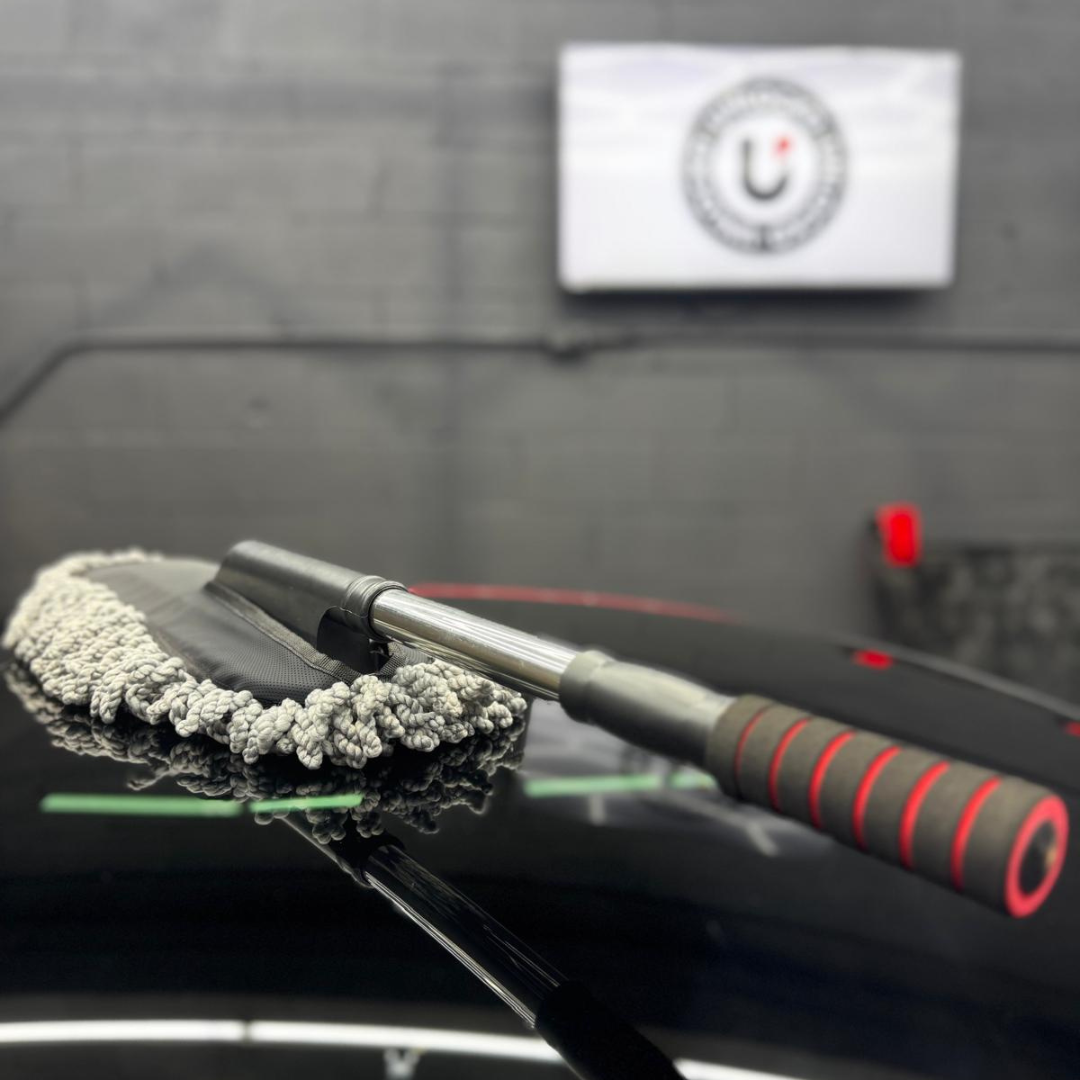
What is the UNLOCKD Extendable Microfiber Car Duster used for?
The UNLOCKD Extendable Microfiber Car Duster removes light, loose surface dust from an otherwise clean, dry vehicle between washes. Its wax-treated fibres help collect dust, making it useful for garage-kept cars, showroom vehicles, and touch-ups before a car meet or customer handover. The extendable design helps you reach across larger panels without leaning against the bodywork. Expect a cleaner appearance after removing surface dust—not removal of water spots, fingerprints, road film, or bonded contamination. Those require an appropriate cleaning product or a proper wash.
Can a microfiber car duster scratch paint or leave swirl marks on a black car?
Any car duster can scratch paint if abrasive particles become trapped between the fibres and the finish. Black and dark paint make fine marks particularly noticeable, so careful inspection matters more than the colour itself. Use the UNLOCKD duster only on lightly dusty surfaces, check the fibres for grit, and glide gently without pressing down. Never scrub a mark that remains after a light pass. If the vehicle has been exposed to road spray, construction dust, or sand, wash it instead. Soft fibres cannot make abrasive contamination safe to drag across paint.
How do I use the extendable car duster correctly?
Start with a cool, dry vehicle and inspect both the surface and the duster for grit. Adjust the length so you can comfortably reach the panel, then guide the fibres across it with long, light passes. Keep the handle and hard components away from the finish, and avoid pressing the duster head into the paint. Gently shake out loose dust away from the vehicle as needed. No water, dilution, or dwell time is required. Stop if the fibres catch debris or a mark needs repeated rubbing; switch to an appropriate washing method.
How far does the UNLOCKD car duster extend, and is it useful for SUVs and trucks?
The UNLOCKD Extendable Microfiber Car Duster measures approximately 73 cm (29 in.) and extends to 86 cm (34 in.). That additional reach is useful across wide hoods and roof areas on cars, SUVs, and pickup trucks. Whether you can reach an entire roof depends on the vehicle’s height and width, as well as your own reach. Work from both sides when necessary instead of stretching until you lose control. The extension helps with access, but it should still allow you to maintain gentle contact and keep hard components clear of the paint.
Can I use this car duster to remove pollen or winter road salt?
Reserve the duster for a very light layer of loose, dry pollen on an otherwise clean surface. If pollen has become damp, sticky, or mixed with grit, wash the vehicle rather than brushing it off. Never use a dry duster to remove winter road salt, dried slush, or road film. These deposits need rinsing and suitable washing to release them without dragging contamination across the finish. For Canadian drivers, the key distinction is surface condition: light garage dust is a suitable touch-up task; residue from winter driving is a wash task.
Can I use the UNLOCKD car duster on ceramic coatings, PPF, vinyl wraps, or matte paint?
Compatibility with every ceramic coating, paint protection film, vinyl wrap, or matte finish has not been confirmed for this duster. Check your coating or film manufacturer’s care instructions before using a wax-treated tool. Some finishes require specific maintenance products or restrict wax-containing materials. A protective coating also does not eliminate the risk of scratching from trapped grit. If dry dusting is permitted, use minimal contact on a cool, lightly dusty surface and test an inconspicuous area first. For an unconfirmed finish, follow its approved washing method.
Should I use a car duster or a quick detailer between washes?
Choose the UNLOCKD car duster for loose, dry dust on an otherwise clean vehicle. A suitable quick detailer and clean microfiber towel may be more appropriate for light smudges or fingerprints, provided the spray is approved for that surface and level of contamination. Neither approach replaces washing when sand, road film, or substantial dirt is present. Do not spray quick detailer onto the wax-treated duster or use it as a wet wiping tool. Keep dusting and spray cleaning separate so each tool is used for its intended purpose.
How do I clean the wax-treated duster, and when should I replace it?
For routine care, gently shake out loose dust after use and store the duster in a clean, dry place protected from grit. Do not assume it can be machine washed like an untreated microfiber towel: washing may affect the wax treatment. Confirm the appropriate cleaning method with UNLOCKD before soaking it or applying detergent. There is no fixed replacement interval. Inspect its condition and performance, and stop using it on paint if the fibres retain abrasive debris, become damaged, or no longer collect light dust effectively.
Why is my wax-treated car duster leaving streaks?
Heat, moisture, or transferred wax residue can contribute to streaking with wax-treated dusters. Stop dusting and check that both the vehicle and the fibres are cool and completely dry. Avoid pressing harder or repeatedly buffing the streak with the duster. On an otherwise clean panel, use a finish-compatible detailing product and a separate clean microfiber towel according to the product directions; wash first if dirt is present. If streaking continues under suitable conditions, contact UNLOCKD for care guidance before attempting to wash or retreat the fibres.