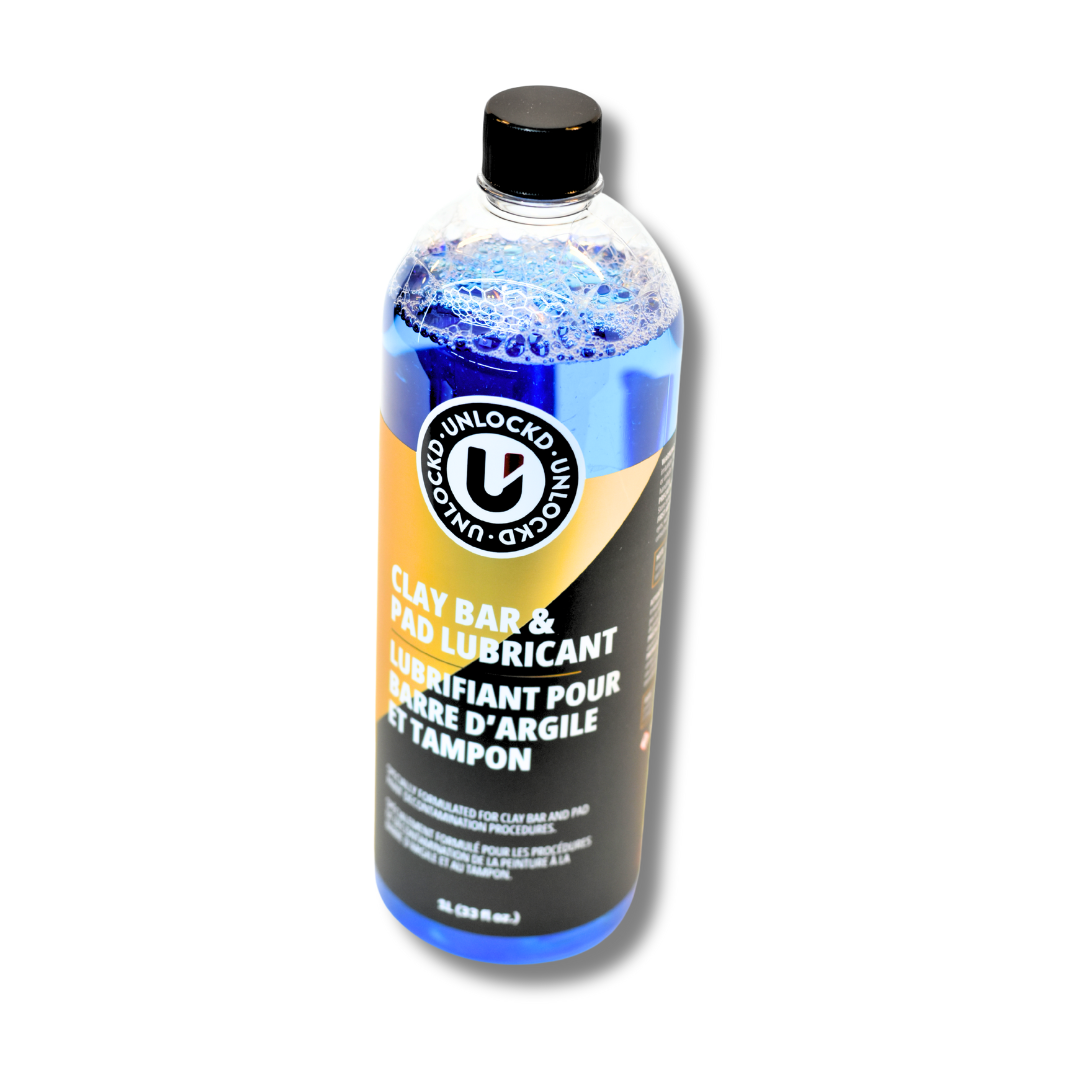
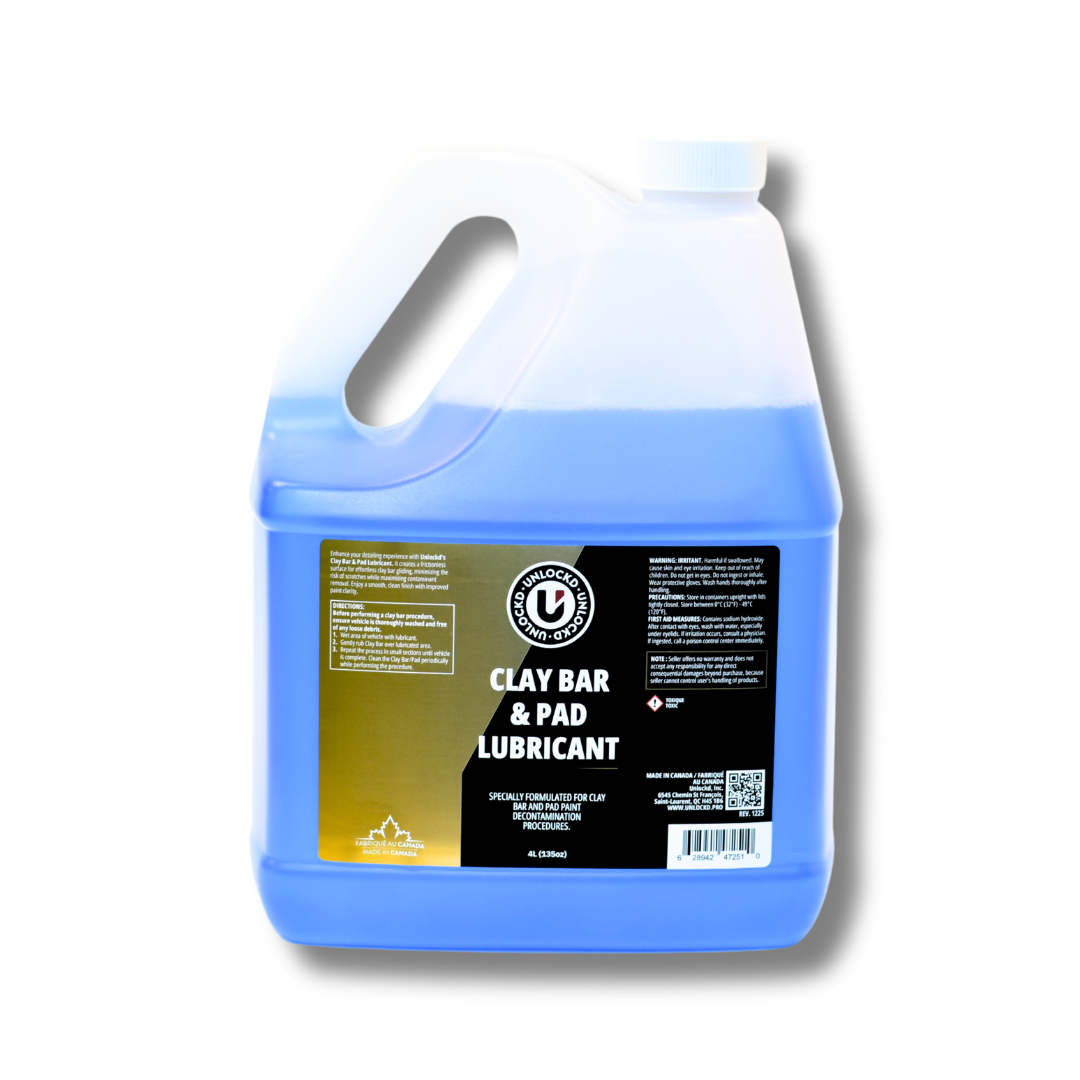
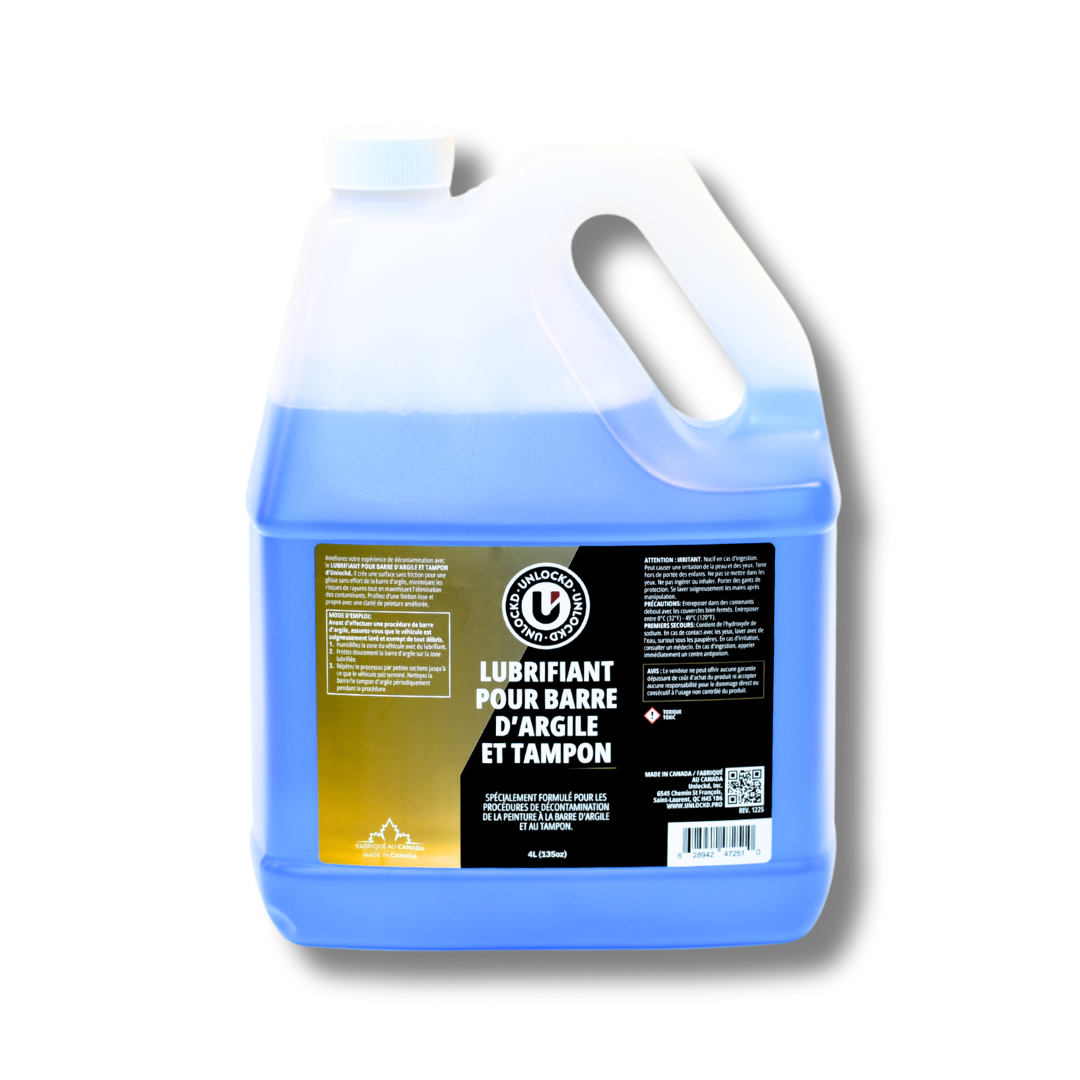
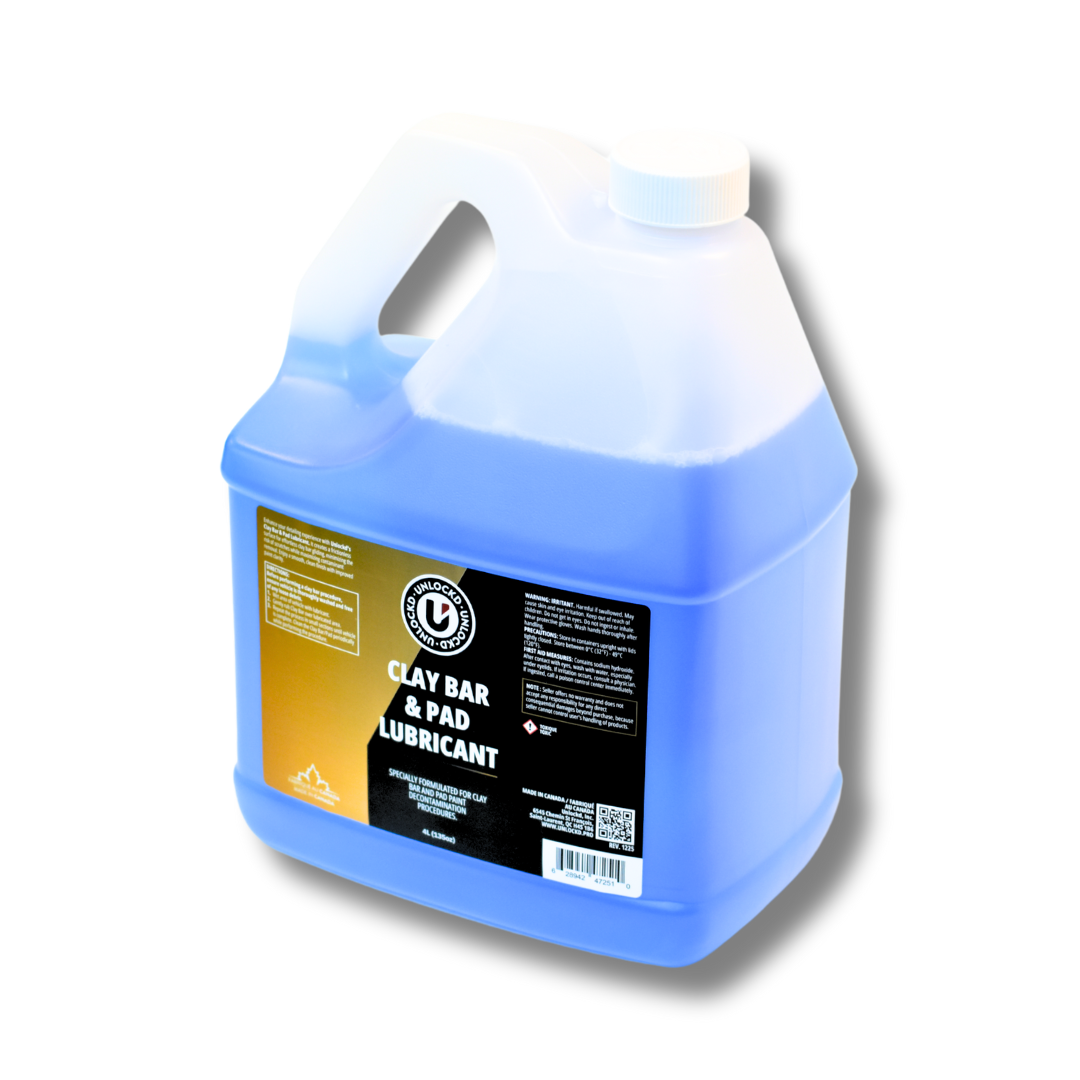
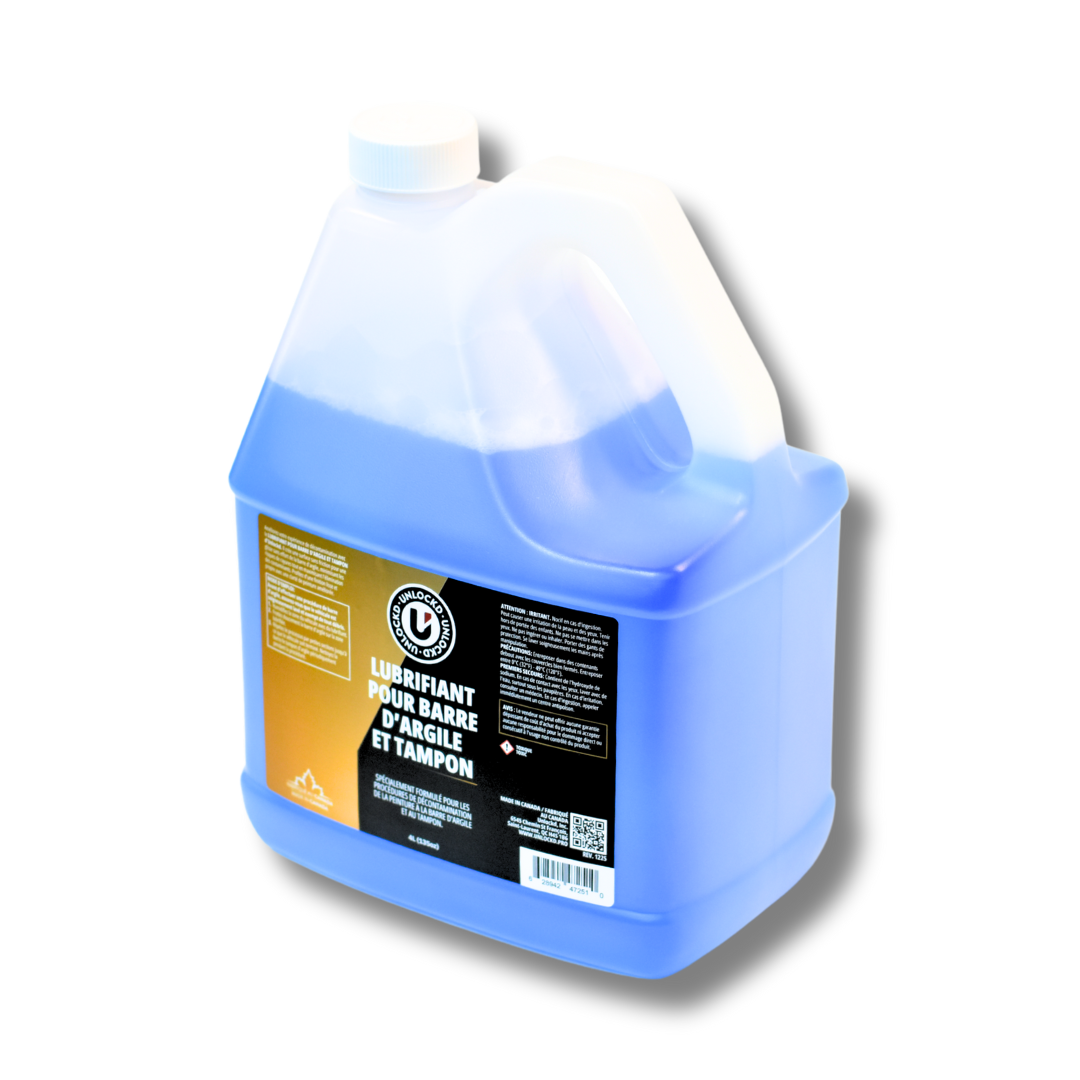
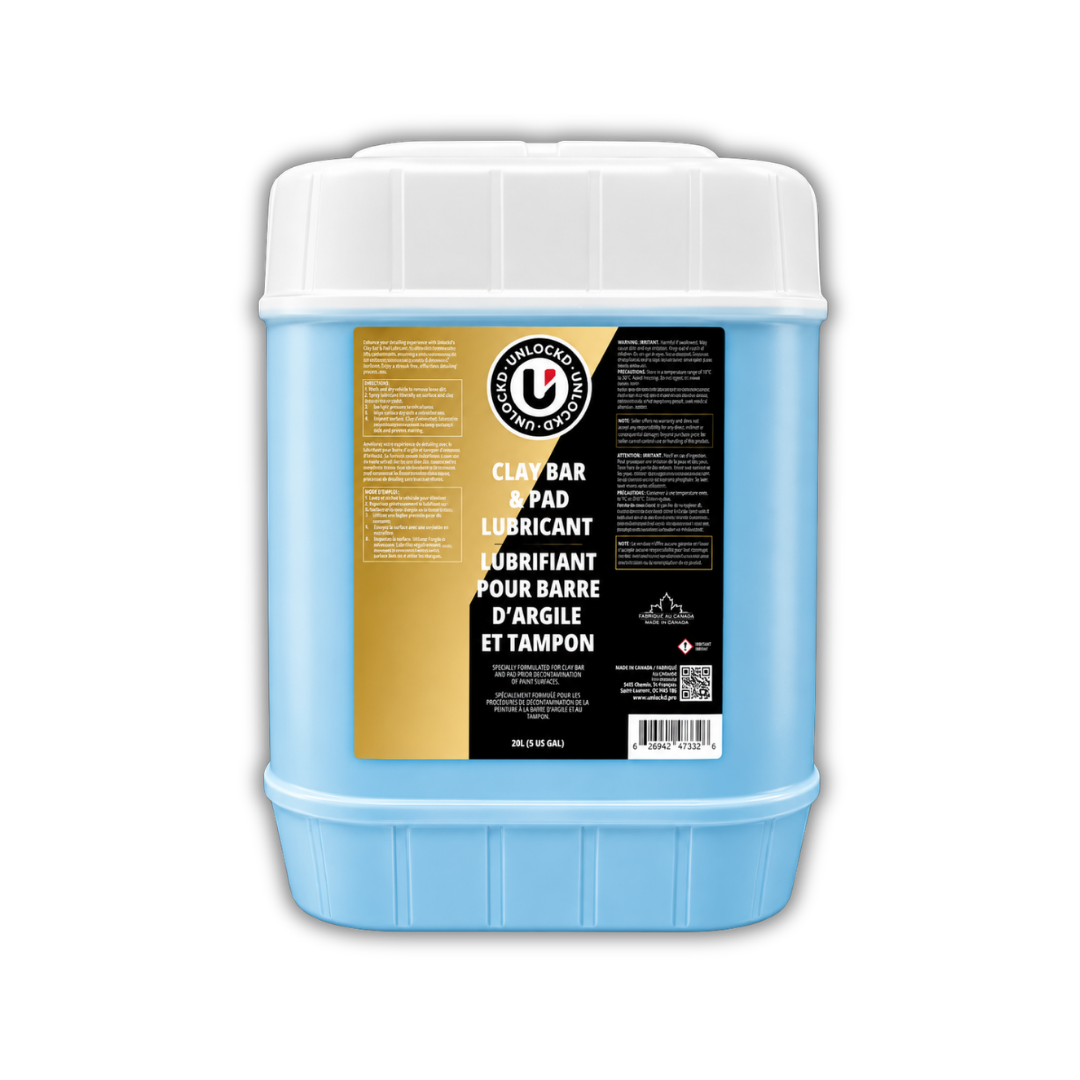
Clay Bar & Pad Lubricant
Couldn't load pickup availability

What does UNLOCKD Clay Bar & Pad Lubricant do?
UNLOCKD Clay Bar & Pad Lubricant provides the slick working surface needed when using a clay bar or clay pad to mechanically decontaminate automotive surfaces. The lubricant reduces friction between the clay media and the surface, helping it glide smoothly while the clay removes bonded contaminants that normal washing may leave behind.
Clay decontamination is commonly used for contaminants such as industrial fallout, embedded road contamination, brake dust and light overspray that can leave paint feeling rough even after a thorough wash. The lubricant itself is not a polish and does not remove scratches, swirls or other defects within the paint. Its job is to support the decontamination process so the clay can work effectively with less unnecessary dragging across the surface. After claying, properly decontaminated paint should feel noticeably smoother and be better prepared for the next detailing step.
Why do I need lubricant when using a clay bar or clay pad?
Clay lubricant is important because using clay on a surface without enough lubrication can create excessive friction, causing the clay to grab, skip or drag instead of gliding smoothly. Proper lubrication creates a slick barrier between the clay media and the vehicle surface, helping reduce unnecessary marring during mechanical decontamination.
Apply enough UNLOCKD Clay Bar & Pad Lubricant to keep the section you are working on consistently wet and slick. If the clay begins to feel resistant or starts sticking to the surface, stop and apply more lubricant rather than increasing pressure. Clay should move with light, controlled passes; aggressive pressure is not what removes the contamination. For enthusiasts and professional detailers alike, maintaining adequate lubrication is one of the most important parts of a controlled clay-bar process.
How do I use UNLOCKD Clay Bar & Pad Lubricant correctly?
Start with a thoroughly washed vehicle so loose dirt and abrasive debris are removed before claying. Working on a small section at a time, spray enough Clay Bar & Pad Lubricant onto the surface to create a slick working area, then gently move your clay bar or compatible clay pad across the lubricated section using light, controlled passes.
Continue until the clay moves freely and the surface no longer has the same rough or contaminated feel. Add more lubricant whenever the surface begins to lose slickness; never compensate for insufficient lubrication by pressing harder. Frequently inspect your clay media as you work and expose a clean section when necessary. Once the section is complete, remove the remaining lubricant and contamination with a clean microfiber towel as appropriate before moving to the next panel.
What contaminants can a clay bar and clay lubricant remove from car paint?
A properly lubricated clay bar or clay pad is designed to remove bonded surface contamination that can remain attached to a vehicle after normal washing. Depending on the contamination and clay media being used, this can include industrial fallout, embedded particles, brake dust and certain types of overspray.
These contaminants often make clean paint feel gritty or rough when you gently run your hand over the surface. Claying mechanically lifts this above-surface contamination, which is why the paint can feel considerably smoother afterward. However, clay is not a substitute for polishing or paint correction. Scratches, swirl marks, oxidation, etching and other defects in the paint itself generally require a different correction process. For heavily contaminated vehicles, chemical decontamination may also be appropriate before mechanical claying to reduce how much bonded material the clay needs to remove.
Should I clay my car before waxing, polishing or applying a ceramic coating?
Clay decontamination can be an important preparation step before polishing, waxing, sealing or installing a ceramic coating when bonded contamination is present. Removing that contamination creates a cleaner, smoother surface for the detailing steps that follow.
The exact process depends on the condition of the vehicle. A typical detail may involve thoroughly washing the vehicle, performing any necessary chemical decontamination, using UNLOCKD Clay Bar & Pad Lubricant with the appropriate clay media, and then proceeding to polishing or protection as required. Because claying is a mechanical process, some vehicles may show light marring afterward, particularly with more aggressive clay media or heavily contaminated paint. If a ceramic coating is being installed, complete all required correction and final surface-preparation steps after claying and before applying the coating rather than treating clay lubricant as the final coating-prep stage.
How often should I clay bar my car?
You should clay your vehicle based on contamination rather than automatically claying it every time you wash. If freshly washed paint still feels rough or gritty, or the vehicle has accumulated bonded environmental and road contamination, mechanical decontamination may be appropriate.
Vehicles exposed to industrial fallout, heavy traffic, outdoor parking, construction areas or harsh Canadian driving conditions may develop bonded contamination faster than vehicles that are garaged and regularly maintained. Because claying mechanically interacts with the paint surface, there is no benefit to repeatedly claying paint that is already clean and smooth. Instead, inspect the surface after washing and decontaminate when necessary. Keeping the vehicle properly protected and maintaining it regularly can also help make future contamination easier to manage.
Can I use UNLOCKD Clay Bar & Pad Lubricant with a clay pad instead of a traditional clay bar?
Yes. UNLOCKD Clay Bar & Pad Lubricant is specifically positioned for use with clay bars and clay pads, making it suitable for traditional clay-bar detailing as well as compatible pad-based decontamination methods. In either case, the key is maintaining enough lubrication for the clay media to move freely over the surface.
UNLOCKD's 4" Clay Bar Pad, for example, is designed for automotive paint, glass and chrome and can be used by hand or with a compatible DA polisher. When using any clay pad, follow the instructions for that specific pad and equipment rather than assuming every clay media works identically. Keep the working area well lubricated, avoid unnecessary pressure and regularly inspect the clay surface for accumulated contamination. The goal is controlled contaminant removal, not aggressive scrubbing.
Can clay bar lubricant prevent scratches and marring while claying a car?
Proper clay lubrication helps reduce the risk of marring by minimizing friction, but it cannot guarantee that claying will leave every paint finish completely mark-free. Clay decontamination is a mechanical process, and the final result also depends on the condition of the paint, contamination level, clay grade, technique and cleanliness of the clay media.
For safer results, wash the vehicle thoroughly before claying, use generous lubrication and apply only light pressure. Never continue dragging clay across a section that feels dry, and do not use contaminated clay media on the paint. Softer or more sensitive finishes may show light marring more easily, while aggressive clay media can increase the likelihood of visible marks. When preparing a vehicle for a high-level detail or ceramic coating, polishing after mechanical decontamination may be appropriate if the paint requires correction.
How much Clay Bar & Pad Lubricant do I need to decontaminate a vehicle?
The amount needed depends on the vehicle's size, contamination level, clay media and how much of the vehicle requires decontamination. There is no reliable fixed number of vehicles per bottle because a lightly contaminated car needing only spot treatment can require substantially less lubricant than a large or heavily contaminated vehicle receiving a complete clay treatment.
Use enough product to maintain consistent slickness rather than trying to minimize the number of sprays. If the clay begins dragging, sticking or losing its smooth glide, apply additional lubricant. Professional detailers working on multiple vehicles or larger jobs may benefit from larger-format quantities, while smaller sizes can be practical for occasional personal detailing. UNLOCKD also offers Clay Bar & Pad Lubricant in a 20 L format for higher-volume use.
Can I use water instead of a dedicated clay bar lubricant?
A dedicated clay lubricant is generally the better choice when the clay media you are using calls for one because plain water may not provide the same level of sustained slickness during decontamination. Insufficient lubrication can cause the clay to grab or drag across the surface, increasing unnecessary friction.
UNLOCKD Clay Bar & Pad Lubricant is intended specifically to provide lubrication during clay-bar and clay-pad use, removing the guesswork involved in creating a homemade clay-lube mixture. Regardless of the lubricant, always follow the requirements of your specific clay bar or pad because different clay media can have different usage instructions. The practical rule is simple: the clay should glide smoothly with light pressure. If it starts dragging, stop and restore adequate lubrication before continuing.
PRO KITS SALE—UP TO 45% OFF
HAND-PICKED KITS FEATURING OUR TOP-PERFORMING PRODUCTS—UP TO 45% OFF
BUILD YOUR OWN KIT
ASSEMBLE ALL THE PRODUCTS YOU NEED, SAVE UP TO 20% OFF OF YOUR ORDER
Description
Professional Lubrication for Safer Paint Decontamination
The UNLOCKD Clay Bar & Pad Lubricant provides the slick, lubricated surface needed for safe and effective mechanical paint decontamination. Designed for use with automotive clay bars, clay mitts, and synthetic clay pads, its high-lubricity formula helps reduce friction and drag as the clay moves across paint, glass, and other compatible exterior surfaces. This helps minimize unnecessary marring while allowing your clay media to effectively remove bonded contaminants that regular washing can leave behind.
Ideal for car enthusiasts, professional detailers, and vehicle owners preparing paint for polishing, waxing, or ceramic protection, Clay Bar & Pad Lubricant makes the decontamination process smoother, safer, and easier to control. The result is a noticeably smoother surface with bonded contamination removed and the vehicle properly prepared for the next detailing step. Proudly Canadian-made, UNLOCKD.PRO delivers professional-grade detailing products developed for reliable performance and straightforward use.
Professional Lubrication for Safer Paint Decontamination
The UNLOCKD Clay Bar & Pad Lubricant provides the slick, lubricated surface needed for safe and effective mechanical paint decontamination. Designed for use with automotive clay bars, clay mitts, and synthetic clay pads, its high-lubricity formula helps reduce friction and drag as the clay moves across paint, glass, and other compatible exterior surfaces. This helps minimize unnecessary marring while allowing your clay media to effectively remove bonded contaminants that regular washing can leave behind.
Ideal for car enthusiasts, professional detailers, and vehicle owners preparing paint for polishing, waxing, or ceramic protection, Clay Bar & Pad Lubricant makes the decontamination process smoother, safer, and easier to control. The result is a noticeably smoother surface with bonded contamination removed and the vehicle properly prepared for the next detailing step. Proudly Canadian-made, UNLOCKD.PRO delivers professional-grade detailing products developed for reliable performance and straightforward use.
Directions for Use
Step 1: Wash & Prepare the Vehicle
Thoroughly wash and rinse the vehicle to remove loose dirt, sand, road grime, and other surface debris before beginning the clay treatment. Dry the vehicle unless your preferred detailing process calls for working on a wet surface. For best results, work on a cool surface out of direct sunlight.
Step 2: Inspect & Prepare Your Clay Media
If using a traditional clay bar, knead and flatten it into a manageable working shape. If using a synthetic clay pad or mitt, make sure the working surface is clean and free from trapped debris before making contact with the vehicle.
Step 3: Apply Clay Bar & Pad Lubricant
Generously spray Clay Bar & Pad Lubricant over a small working section. The surface should remain well lubricated throughout the entire claying process.
Step 4: Decontaminate the Surface
Using light pressure, glide the clay bar, mitt, or pad across the lubricated area with controlled overlapping passes. Do not force the clay media against the surface. Continue until the clay moves smoothly and the bonded contamination has been removed.
Step 5: Maintain Proper Lubrication
Reapply lubricant whenever additional slickness is required. Never allow the clay media to move across a dry or insufficiently lubricated surface.
Step 6: Clean Your Clay Bar, Pad or Mitt
Regularly inspect the clay media for collected contamination. Knead and expose a clean section of a traditional clay bar as required, or rinse compatible synthetic clay media according to its care instructions. If a traditional clay bar is dropped on the ground, discard it rather than reusing it on the vehicle.
Step 7: Wipe & Inspect
Wipe away remaining lubricant and loosened residue with a clean microfiber towel. Inspect the surface and repeat the process where necessary before moving to the next section.
Step 8: Continue With Paint Correction or Protection
Once the vehicle has been fully decontaminated, proceed with the appropriate surface-preparation process for your next detailing step. The vehicle can then be polished, waxed, sealed, or prepared for a compatible ceramic protection product.
Step 1: Wash & Prepare the Vehicle
Thoroughly wash and rinse the vehicle to remove loose dirt, sand, road grime, and other surface debris before beginning the clay treatment. Dry the vehicle unless your preferred detailing process calls for working on a wet surface. For best results, work on a cool surface out of direct sunlight.
Step 2: Inspect & Prepare Your Clay Media
If using a traditional clay bar, knead and flatten it into a manageable working shape. If using a synthetic clay pad or mitt, make sure the working surface is clean and free from trapped debris before making contact with the vehicle.
Step 3: Apply Clay Bar & Pad Lubricant
Generously spray Clay Bar & Pad Lubricant over a small working section. The surface should remain well lubricated throughout the entire claying process.
Step 4: Decontaminate the Surface
Using light pressure, glide the clay bar, mitt, or pad across the lubricated area with controlled overlapping passes. Do not force the clay media against the surface. Continue until the clay moves smoothly and the bonded contamination has been removed.
Step 5: Maintain Proper Lubrication
Reapply lubricant whenever additional slickness is required. Never allow the clay media to move across a dry or insufficiently lubricated surface.
Step 6: Clean Your Clay Bar, Pad or Mitt
Regularly inspect the clay media for collected contamination. Knead and expose a clean section of a traditional clay bar as required, or rinse compatible synthetic clay media according to its care instructions. If a traditional clay bar is dropped on the ground, discard it rather than reusing it on the vehicle.
Step 7: Wipe & Inspect
Wipe away remaining lubricant and loosened residue with a clean microfiber towel. Inspect the surface and repeat the process where necessary before moving to the next section.
Step 8: Continue With Paint Correction or Protection
Once the vehicle has been fully decontaminated, proceed with the appropriate surface-preparation process for your next detailing step. The vehicle can then be polished, waxed, sealed, or prepared for a compatible ceramic protection product.
Key Benefits
Reduced Friction & Drag
Creates a slick lubricating layer that helps clay bars, mitts, and pads glide smoothly across the surface.
Helps Minimize Marring
Proper lubrication reduces unnecessary friction during mechanical decontamination, helping support a safer claying process.
Improves Bonded Contaminant Removal
Allows clay media to work effectively against embedded contamination that remains after a normal vehicle wash.
Smoother Paint Finish
Helps remove surface contamination responsible for the rough or gritty texture that can remain on otherwise clean paint.
Better Control During Claying
Maintains lubrication between the clay media and surface, making each pass smoother and easier to manage.
Ideal for Paint Preparation
Creates a properly decontaminated surface before paint correction, polishing, waxing, sealants, or ceramic protection.
Compatible With Multiple Clay Media
Designed for use with traditional detailing clay bars as well as compatible synthetic clay pads and mitts.
Professional-Grade Detailing Performance
Provides enthusiasts and professional detailers with the lubrication needed for controlled, efficient vehicle decontamination.
Reduced Friction & Drag
Creates a slick lubricating layer that helps clay bars, mitts, and pads glide smoothly across the surface.
Helps Minimize Marring
Proper lubrication reduces unnecessary friction during mechanical decontamination, helping support a safer claying process.
Improves Bonded Contaminant Removal
Allows clay media to work effectively against embedded contamination that remains after a normal vehicle wash.
Smoother Paint Finish
Helps remove surface contamination responsible for the rough or gritty texture that can remain on otherwise clean paint.
Better Control During Claying
Maintains lubrication between the clay media and surface, making each pass smoother and easier to manage.
Ideal for Paint Preparation
Creates a properly decontaminated surface before paint correction, polishing, waxing, sealants, or ceramic protection.
Compatible With Multiple Clay Media
Designed for use with traditional detailing clay bars as well as compatible synthetic clay pads and mitts.
Professional-Grade Detailing Performance
Provides enthusiasts and professional detailers with the lubrication needed for controlled, efficient vehicle decontamination.
Pro Detailing Tip
Use plenty of lubricant and minimal pressure. Let the clay media do the work rather than pressing aggressively against the paint. On heavily contaminated vehicles, work in smaller sections and frequently inspect your clay media to reduce the chance of dragging collected particles across the finish. Mechanical decontamination may cause some level of marring on certain paints, so polishing afterward may be beneficial when preparing for a high-quality finish.
Shipping & Processing
We process & ship out all orders within the first 24 - 48 hours of the order being placed.
Shop Our Best-Sellers
Proven formulas, trusted by detailers — built to deliver consistent, high-level results on every vehicle.
UNLOCKD
BUILD YOUR OWN KIT—SAVE 20%
Choose the products you need, skip the ones you don't, and save 15% on $200+, 18% on $250+, or 20% on $300+. Professional-grade, Canadian-made car care—built your way