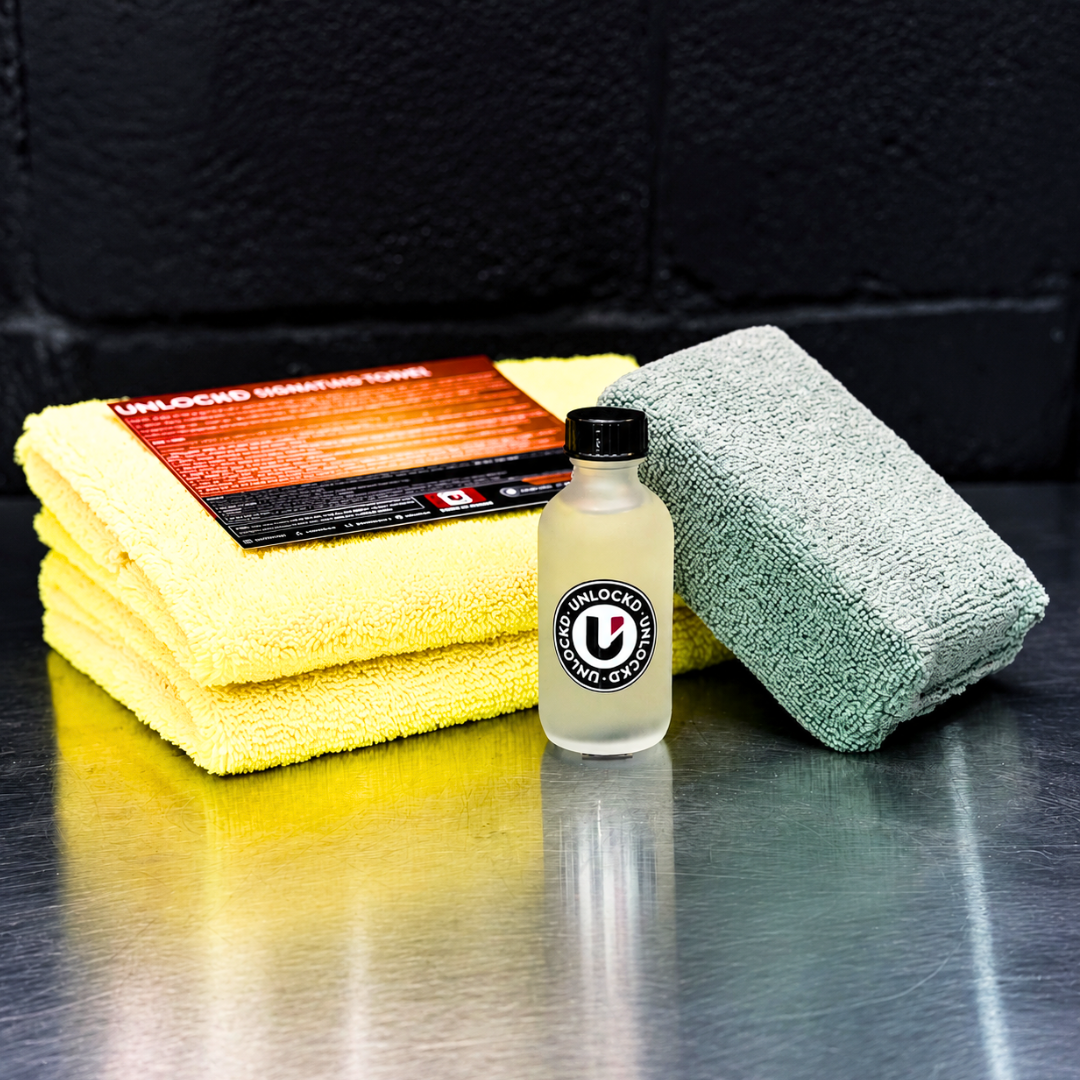
What is the UNLOCKD Ceramic Coating Kit designed to do?
The UNLOCKD Ceramic Coating Kit is a professional-use paint protection system intended to create a durable protective coating over properly prepared automotive surfaces. Unlike a conventional wax or short-term spray protectant, a professional ceramic coating is applied as a dedicated coating treatment that requires careful surface preparation, controlled application and proper curing.
Once correctly installed, the coating is designed to enhance the vehicle’s finish while creating a hydrophobic surface that makes water and everyday contamination easier to manage during maintenance. Because preparation and installation technique directly affect the final appearance and performance, this kit is specifically identified for professional use rather than casual wipe-on application. The vehicle should be thoroughly washed, decontaminated and appropriately prepared before coating.
Why is the UNLOCKD Ceramic Coating Kit for professional use only?
Professional ceramic coatings require substantially more preparation and application control than spray waxes, ceramic sprays or traditional paint sealants. Incorrect application can leave high spots, uneven areas or coating residue that may require polishing to correct once the coating begins curing.
Professional installers understand how to evaluate the paint, perform decontamination and paint correction when necessary, remove polishing oils and residue, and apply and level a coating under appropriate working conditions. Lighting, temperature, humidity, surface condition and application technique can all influence the installation process. For that reason, the UNLOCKD Ceramic Coating Kit is positioned specifically for professional use. Vehicle owners looking for a simpler maintenance-oriented ceramic product should consider a product designed specifically for easier spray-and-wipe application rather than treating a professional coating as a beginner DIY product.
How should a vehicle be prepared before applying a professional ceramic coating?
A ceramic coating should be applied to a thoroughly cleaned, decontaminated and properly prepared surface. Washing is only the beginning: bonded contamination should be addressed as necessary, and the paint should be inspected for defects before coating.
If polishing or paint correction is required, it should be completed before the coating is installed. Polishing oils, waxes, sealants and other residues must also be removed so the ceramic coating is applied directly to the prepared surface rather than over an existing protection product or contamination. A dedicated surface-preparation step is therefore particularly important. Proper preparation also matters visually because a ceramic coating should not be expected to remove scratches, oxidation, water spots or swirl marks. Existing paint defects should be corrected to the desired standard before the coating is applied.
How long does the UNLOCKD Ceramic Coating Kit last?
The exact durability of the UNLOCKD Ceramic Coating Kit should not be reduced to a universal number because real-world ceramic coating longevity depends heavily on installation, vehicle use, storage, environmental exposure and maintenance. Proper surface preparation and professional application are particularly important to achieving the coating’s intended performance.
After installation, frequent exposure to harsh chemicals, abrasive washing, neglected contamination and severe driving conditions can affect a coating differently than careful hand washing and regular maintenance. Canadian vehicles may also encounter road salt, winter grime, freeze-thaw cycles and other demanding seasonal conditions. Rather than judging the coating only by age, professionals should also evaluate its water behaviour, ease of cleaning and overall surface condition during maintenance details. Follow UNLOCKD's product-specific application and curing requirements when determining expected service life.
How long does ceramic coating need to cure before the vehicle can be washed or exposed to water?
Cure time is product-specific, so the installer should follow the application and curing instructions supplied with the UNLOCKD Ceramic Coating Kit rather than relying on a universal ceramic-coating timeline. A coating can appear dry or finished before the curing process is complete.
During the initial curing period, unnecessary contact with water, cleaners and environmental contamination should be minimized according to the product instructions. This is one reason professional coatings are best installed in a clean, controlled environment where the vehicle can remain protected after application. Do not assume that another brand’s recommended 12-hour, 24-hour, 48-hour or seven-day timeline automatically applies to this coating. Correct curing is part of the installation process and can influence the coating’s final appearance and performance.
Does ceramic coating protect a car from scratches, stone chips and winter road salt?
Ceramic coating provides a protective surface layer, but it should not be confused with physical impact protection. It can help the finish resist everyday environmental contamination and make dirt, road film and winter grime easier to remove, but it does not make automotive paint scratch-proof or prevent rock chips.
This distinction is especially important for Canadian vehicles exposed to winter road debris, salt and abrasive contamination. Safe washing is still necessary because improper contact washing can introduce swirls even on coated paint. For physical protection against stone chips and road impacts, paint protection film (PPF) serves a different purpose. Ceramic coating is primarily used for surface protection, hydrophobic behaviour, appearance and easier maintenance—not as a substitute for PPF or careful washing techniques.
Can the UNLOCKD Ceramic Coating Kit be applied over wax, paint sealant or another ceramic product?
A professional ceramic coating generally should not be installed directly over conventional wax, paint sealant or unknown protection residue. The coating needs a properly prepared surface, which is why existing protection, polishing oils and contamination should be addressed before application.
Layering products without confirming compatibility can interfere with the coating process and produce inconsistent results. If a vehicle has previously been waxed, sealed or ceramic-coated, a professional detailer should first determine what remains on the surface and prepare it accordingly. The same principle applies after polishing: visually clean paint can still contain polishing oils or residue. A dedicated final surface-preparation process immediately before coating helps establish a consistently clean foundation for installation.
Can ceramic coating be applied over PPF or vinyl wrap?
Ceramic coatings can be used with certain paint protection films and automotive wraps, but compatibility should be confirmed for the specific film, finish and coating before application. PPF, gloss vinyl, satin vinyl and matte finishes do not necessarily respond identically to the same coating or preparation process.
This is particularly important with matte or satin surfaces because products or techniques that alter gloss can change the intended appearance. Professionals should follow the film or wrap manufacturer’s care requirements and test compatibility when necessary rather than assuming a paint coating is automatically suitable for every material. Ceramic coating and PPF also perform different jobs: PPF provides a physical film intended to help protect against impacts, while ceramic protection is primarily used to improve surface behaviour, contamination resistance and maintenance characteristics.
How do you maintain a professionally ceramic-coated vehicle after installation?
After the coating has completed its required curing period, maintain the vehicle with regular, careful washing and avoid unnecessarily abrasive cleaning methods. Removing road film, dirt, insects, mineral contamination and winter residue before they become heavily established helps preserve both the appearance of the finish and the coating’s surface behaviour.
Use clean automotive wash equipment and products appropriate for coated surfaces, rinse thoroughly and dry with clean automotive microfiber rather than allowing mineral-rich water to repeatedly dry on the vehicle. Hydrophobic behaviour can sometimes appear weaker because contamination has accumulated on top of a coating, so reduced water beading does not automatically mean the coating has disappeared. Periodic professional inspection and appropriate decontamination can help determine whether the surface simply needs cleaning or whether the protection itself requires attention.
Is a professional ceramic coating better than car wax or a ceramic coating spray?
They serve different purposes. A professional ceramic coating is intended for customers seeking a more involved, professionally installed protection treatment, while traditional waxes and ceramic sprays generally offer simpler application and easier periodic renewal.
A true coating requires considerably more preparation because the condition of the surface becomes part of the finished result. Spray ceramic products can be excellent for routine protection, maintenance or customers who prioritize fast application, but they should not automatically be treated as equivalent to a professionally installed coating system. Traditional wax can also remain appropriate when a customer prefers its application process or wants protection that can be reapplied more frequently. The best choice depends on the vehicle, desired durability, maintenance expectations, budget and whether professional paint preparation and installation are appropriate.