Clay Bar Kits (Multiple Options)
Couldn't load pickup availability

PRO KITS SALE—UP TO 45% OFF
HAND-PICKED KITS FEATURING OUR TOP-PERFORMING PRODUCTS—UP TO 45% OFF
BUILD YOUR OWN KIT
ASSEMBLE ALL THE PRODUCTS YOU NEED, SAVE UP TO 20% OFF OF YOUR ORDER
Description
Your Choice of Wax or Ceramic Spray
Paint still feels rough after washing? Take your finish one step further. The UNLOCKD Clay Bar Kits help enthusiasts, daily drivers, and professional detailers remove bonded surface contaminants that regular car shampoo can leave behind. Used with the included lubricant, the detailing clay lifts contamination from clean paint, leaving a smoother surface ready for polishing or protection.
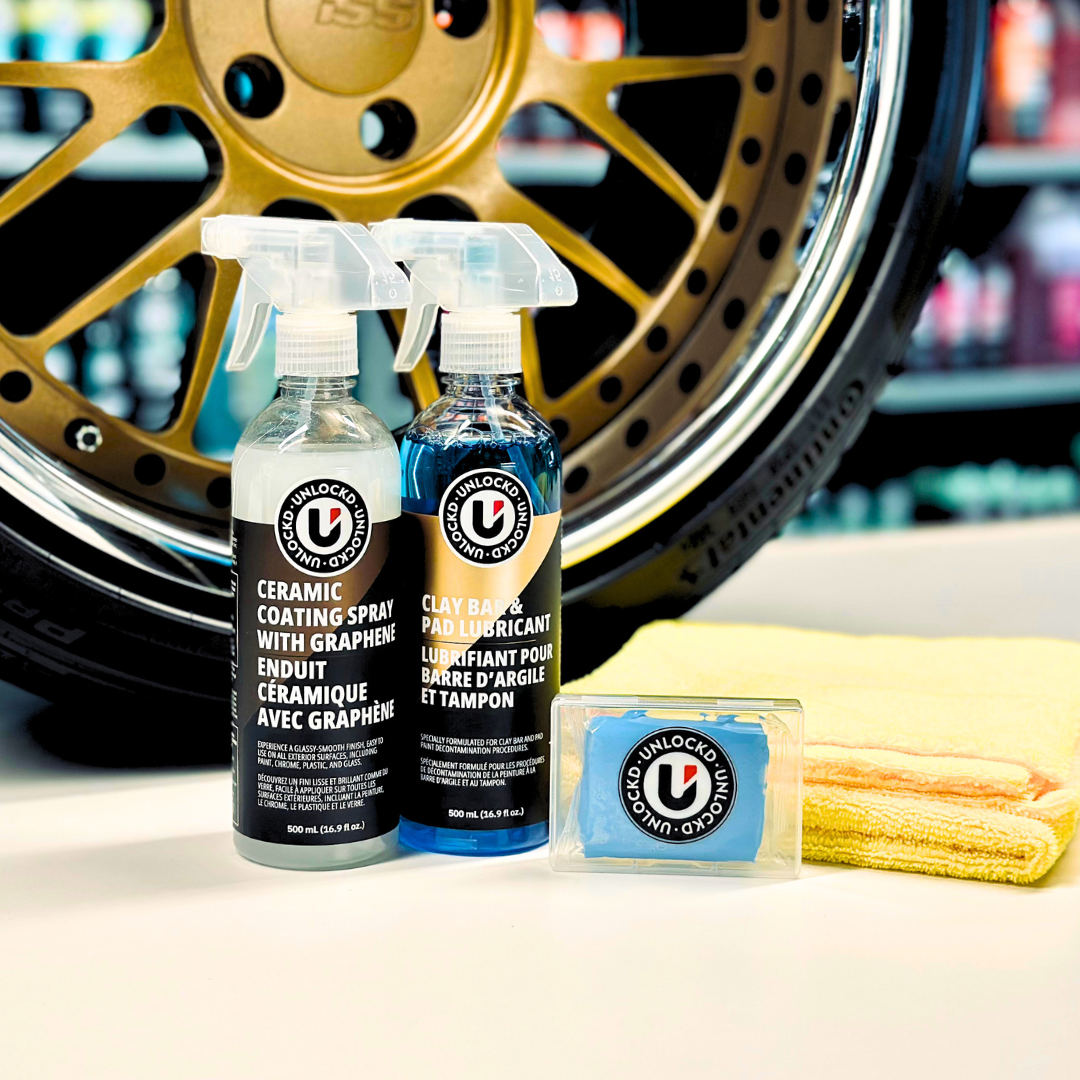
Each kit combines a 100 g clay bar, 500 mL Clay Bar Lubricant, an Edgeless Microfiber Towel, and a Premium Microfiber Towel with your choice of finishing protection. Choose 236.6 mL Carnauba Wax with an Applicator Pad, 500 mL Spray Wax, or 500 mL Ceramic Coating Spray with Graphene to suit your detailing routine. With Canadian-made car-care formulas and three finishing options, UNLOCKD.PRO brings surface preparation and protection together in one practical ensemble. Select your preferred option in the “Add On” section before adding to cart.
Your Choice of Wax or Ceramic Spray
Paint still feels rough after washing? Take your finish one step further. The UNLOCKD Clay Bar Kits help enthusiasts, daily drivers, and professional detailers remove bonded surface contaminants that regular car shampoo can leave behind. Used with the included lubricant, the detailing clay lifts contamination from clean paint, leaving a smoother surface ready for polishing or protection.
Each kit combines a 100 g clay bar, 500 mL Clay Bar Lubricant, an Edgeless Microfiber Towel, and a Premium Microfiber Towel with your choice of finishing protection. Choose 236.6 mL Carnauba Wax with an Applicator Pad, 500 mL Spray Wax, or 500 mL Ceramic Coating Spray with Graphene to suit your detailing routine. With Canadian-made car-care formulas and three finishing options, UNLOCKD.PRO brings surface preparation and protection together in one practical ensemble. Select your preferred option in the “Add On” section before adding to cart.
Everything Included in the Kit
Every UNLOCKD Clay Bar Kit includes:
- Clay Bar Lubricant — 500 mL / 16.9 oz: Helps the clay glide smoothly over paint during decontamination.
- Clay Bar — 100 g: Removes bonded surface contaminants that regular washing can leave behind.
- Edgeless Microfiber Towel: For wiping away lubricant residue after claying.
- Premium Microfiber Towel: For final buffing and finishing.
Choose One of Three Protection Options
Complete your kit by selecting one of the following options in the “Add On” section:
- Carnauba Wax — 236.6 mL / 8 oz + Applicator Pad: Ideal for those who enjoy a traditional hand-waxing routine, adding gloss and protection after claying. Includes an applicator pad for application.
- Spray Wax — 500 mL / 16.9 oz: A convenient choice for quick application, added shine, and paint protection after surface preparation.
- Ceramic Coating Spray with Graphene — 500 mL / 16.9 oz: For those who prefer ceramic spray protection, a slick finish, and water-beading performance.
Each kit includes the four core items plus your selected protection option. The applicator pad is included only with the Carnauba Wax option.
Every UNLOCKD Clay Bar Kit includes:
- Clay Bar Lubricant — 500 mL / 16.9 oz: Helps the clay glide smoothly over paint during decontamination.
- Clay Bar — 100 g: Removes bonded surface contaminants that regular washing can leave behind.
- Edgeless Microfiber Towel: For wiping away lubricant residue after claying.
- Premium Microfiber Towel: For final buffing and finishing.
Choose One of Three Protection Options
Complete your kit by selecting one of the following options in the “Add On” section:
- Carnauba Wax — 236.6 mL / 8 oz + Applicator Pad: Ideal for those who enjoy a traditional hand-waxing routine, adding gloss and protection after claying. Includes an applicator pad for application.
- Spray Wax — 500 mL / 16.9 oz: A convenient choice for quick application, added shine, and paint protection after surface preparation.
- Ceramic Coating Spray with Graphene — 500 mL / 16.9 oz: For those who prefer ceramic spray protection, a slick finish, and water-beading performance.
Each kit includes the four core items plus your selected protection option. The applicator pad is included only with the Carnauba Wax option.
Directions for Use
Step 1: Wash and Inspect
Thoroughly wash and rinse the vehicle to remove loose dirt, then dry it with a clean drying towel. Work in the shade on cool paint. Lightly feel the clean surface: areas that remain rough may need claying.
Step 2: Prepare the Clay
With clean hands, knead a portion of the clay into a flat pad that is easy to hold. Keep the unused clay clean and protected. Test a small, inconspicuous area before treating a full panel.
Step 3: Lubricate a Small Section
Spray Clay Bar Lubricant generously onto a small section of paint and the contact face of the clay. Keep the surface wet throughout the process; no dwell time is needed.
Step 4: Glide with Light Pressure
Move the clay gently back and forth in short, straight passes. Let it glide without scrubbing or pressing firmly. Add more lubricant immediately if the clay drags or sticks, and stop once the surface feels smooth.
Step 5: Inspect and Fold Frequently
Check the clay after each section. Fold and knead it to expose a clean face before continuing. Discard clay that falls on the ground or becomes heavily contaminated.
Step 6: Remove Residue and Check the Finish
Gently wipe away lubricant residue with a clean microfiber towel before it dries. If residue remains, rewash or rinse as needed and dry thoroughly. Inspect the paint under good lighting before applying protection.
Step 7: Apply Your Selected Protection
Apply your chosen Carnauba Wax, Spray Wax, or Ceramic Coating Spray with Graphene according to its label. Follow the specific surface-preparation, application, buffing, and curing instructions for that product. Use a separate, clean towel for the finishing stage.
Step 1: Wash and Inspect
Thoroughly wash and rinse the vehicle to remove loose dirt, then dry it with a clean drying towel. Work in the shade on cool paint. Lightly feel the clean surface: areas that remain rough may need claying.
Step 2: Prepare the Clay
With clean hands, knead a portion of the clay into a flat pad that is easy to hold. Keep the unused clay clean and protected. Test a small, inconspicuous area before treating a full panel.
Step 3: Lubricate a Small Section
Spray Clay Bar Lubricant generously onto a small section of paint and the contact face of the clay. Keep the surface wet throughout the process; no dwell time is needed.
Step 4: Glide with Light Pressure
Move the clay gently back and forth in short, straight passes. Let it glide without scrubbing or pressing firmly. Add more lubricant immediately if the clay drags or sticks, and stop once the surface feels smooth.
Step 5: Inspect and Fold Frequently
Check the clay after each section. Fold and knead it to expose a clean face before continuing. Discard clay that falls on the ground or becomes heavily contaminated.
Step 6: Remove Residue and Check the Finish
Gently wipe away lubricant residue with a clean microfiber towel before it dries. If residue remains, rewash or rinse as needed and dry thoroughly. Inspect the paint under good lighting before applying protection.
Step 7: Apply Your Selected Protection
Apply your chosen Carnauba Wax, Spray Wax, or Ceramic Coating Spray with Graphene according to its label. Follow the specific surface-preparation, application, buffing, and curing instructions for that product. Use a separate, clean towel for the finishing stage.
Pro Detailing Tip
For heavily contaminated paint, use suitable iron or tar removers according to their labels before claying. Removing what you can chemically reduces the amount of contamination the clay must collect and the number of passes required.
Important Tips
- Clay removes bonded contamination; it does not correct scratches, swirl marks, or oxidation.
- Claying can cause light marring, particularly on soft or dark paint; polish before protection if needed.
- Never clay dry paint or compensate for stubborn contamination with extra pressure.
- Avoid matte or satin finishes, wraps, and paint protection film unless their manufacturer approves clay use.
- For ceramic-coated vehicles, follow the coating manufacturer’s maintenance guidance before claying.
- Clay when the surface needs it, rather than automatically after every wash.
For heavily contaminated paint, use suitable iron or tar removers according to their labels before claying. Removing what you can chemically reduces the amount of contamination the clay must collect and the number of passes required.
Important Tips
- Clay removes bonded contamination; it does not correct scratches, swirl marks, or oxidation.
- Claying can cause light marring, particularly on soft or dark paint; polish before protection if needed.
- Never clay dry paint or compensate for stubborn contamination with extra pressure.
- Avoid matte or satin finishes, wraps, and paint protection film unless their manufacturer approves clay use.
- For ceramic-coated vehicles, follow the coating manufacturer’s maintenance guidance before claying.
- Clay when the surface needs it, rather than automatically after every wash.
Shipping & Processing
We process & ship out all orders within the first 24 - 48 hours of the order being placed.
Shop Our Best-Sellers
Proven formulas, trusted by detailers — built to deliver consistent, high-level results on every vehicle.
What does a clay bar do to car paint?
A clay bar removes bonded surface contaminants that normal car washing may leave behind, helping restore a smoother, cleaner paint surface. These contaminants can include industrial fallout, stubborn road grime, tree sap residue, overspray, and other particles that become embedded or bonded to the exterior. The UNLOCKD Clay Bar Kit combines a 100 g Clay Bar with Clay Bar Lubricant to provide the mechanical decontamination step, plus microfiber towels and your choice of finishing protection. Claying does not remove scratches, swirl marks, or oxidation; those are paint defects that may require polishing. Instead, clay bar treatment prepares the surface for polishing, waxing, or applying paint protection.
What is included in the UNLOCKD Clay Bar Kit?
Every Clay Bar Kit includes a 500 mL Clay Bar Lubricant, 100 g Clay Bar, Edgeless Microfiber Towel, and Premium Microfiber Towel. You then select one finishing option to complete the kit: Carnauba Wax (236.6 mL) with an Applicator Pad, Spray Wax (500 mL), or Ceramic Coating Spray with Graphene (500 mL). This gives you the products needed to mechanically decontaminate the vehicle and then apply your preferred finishing product. The Carnauba Wax option is suited to a traditional hand-applied wax process, while the Spray Wax and Ceramic Coating Spray with Graphene provide alternative finishing options based on your preferred detailing routine.
How do I know if my car needs to be clay barred?
If freshly washed paint still feels rough, gritty, or slightly textured instead of smooth, bonded contamination may be present and a clay bar treatment can help remove it. One common way to check is the plastic-bag test: after thoroughly washing and drying the vehicle, place your hand inside a clean, thin plastic bag and gently feel the paint. The plastic makes small bonded particles easier to detect. Claying is particularly useful before polishing or applying fresh paint protection because it creates a cleaner, smoother surface. There is no need to clay a vehicle simply because a certain amount of time has passed; the condition of the surface should determine when mechanical decontamination is necessary.
How do I use the UNLOCKD Clay Bar Kit without scratching the paint?
Start with a thoroughly washed vehicle and work on a cool surface out of direct sunlight. Spray a generous amount of Clay Bar Lubricant onto a small section, flatten a clean piece of clay, and glide it gently across the lubricated surface using light pressure. Never clay dry paint. As contamination transfers to the clay, regularly fold and knead it to expose a clean working surface. Add more lubricant whenever the clay stops gliding freely, then wipe the completed section with a clean microfiber towel. If the clay falls onto the ground, do not continue using that piece because trapped grit could mar the finish. After claying, apply your selected wax or ceramic protection option.
Should I wax or protect my car after using a clay bar?
Yes. Clay barring is primarily a surface-preparation and decontamination step rather than a final protection step, so it makes sense to follow it with an appropriate wax or paint-protection product. That is why the UNLOCKD Clay Bar Kits offer three finishing options: Carnauba Wax with an Applicator Pad, Spray Wax, or Ceramic Coating Spray with Graphene. After claying, inspect the paint and polish it first if paint correction is required. Otherwise, apply your selected finishing product according to its directions. This sequence allows you to decontaminate the surface before applying the protection rather than applying wax or another protectant over bonded contaminants.
How often should I clay bar my car?
Clay your vehicle when bonded contamination is present rather than automatically doing it at every wash. A daily driver exposed to road grime, industrial fallout, construction dust, tree contamination, or harsh seasonal conditions may need decontamination more frequently than a garage-kept vehicle. In Canada, inspecting the paint after winter can be especially useful because months of road debris and environmental contamination can leave the surface feeling rough even after a thorough wash. After washing and drying, check the paint for a gritty or textured feel. If it remains smooth, another clay treatment may not be necessary. Avoid unnecessary claying because mechanical decontamination should be performed only when the surface actually needs it.
Should I use an iron remover before a clay bar?
An iron remover and clay bar perform different types of decontamination, so they can complement each other when a vehicle has significant contamination. An iron remover is designed specifically for ferrous particles such as embedded brake dust and industrial fallout, while detailing clay mechanically removes bonded contaminants that remain attached to the surface. On heavily contaminated vehicles, chemical decontamination can be performed after washing and before claying, following the directions for the iron-removal product. After rinsing and preparing the surface, use the clay with plenty of Clay Bar Lubricant. This chemical-then-mechanical approach can reduce the amount of contamination the clay has to physically remove.
Can a clay bar remove scratches, swirl marks, or water spots?
A clay bar is not designed to remove scratches or swirl marks because those defects are within the paint or clear coat rather than simply bonded to its surface. Clay removes above-surface contamination, which can make the paint feel dramatically smoother and prepare it for subsequent detailing steps. Some deposits associated with water spotting may be surface contamination, but etched water spots will generally require a different correction process. If the vehicle has visible swirls, scratches, oxidation, or etching after claying, polishing or another appropriate paint-correction process may be necessary. Think of clay barring as decontamination and surface preparation, not as a substitute for polishing.
Can I clay bar a ceramic-coated, waxed, or sealed vehicle?
Mechanical claying should be approached carefully on any vehicle that already has paint protection because the process can affect the existing protective layer. If a coated, waxed, or sealed surface feels rough after washing, first determine whether chemical decontamination or another maintenance method can address the contamination before using clay. If mechanical decontamination is necessary, use plenty of lubricant, minimal pressure, and avoid unnecessary passes. Because claying can compromise existing waxes, sealants, or other protection, plan to inspect and refresh the protection afterward as appropriate. If the vehicle has a professionally installed ceramic coating, follow the coating manufacturer's maintenance recommendations before performing mechanical decontamination.
UNLOCKD
BUILD YOUR OWN KIT—SAVE 20%
Choose the products you need, skip the ones you don't, and save 15% on $200+, 18% on $250+, or 20% on $300+. Professional-grade, Canadian-made car care—built your way